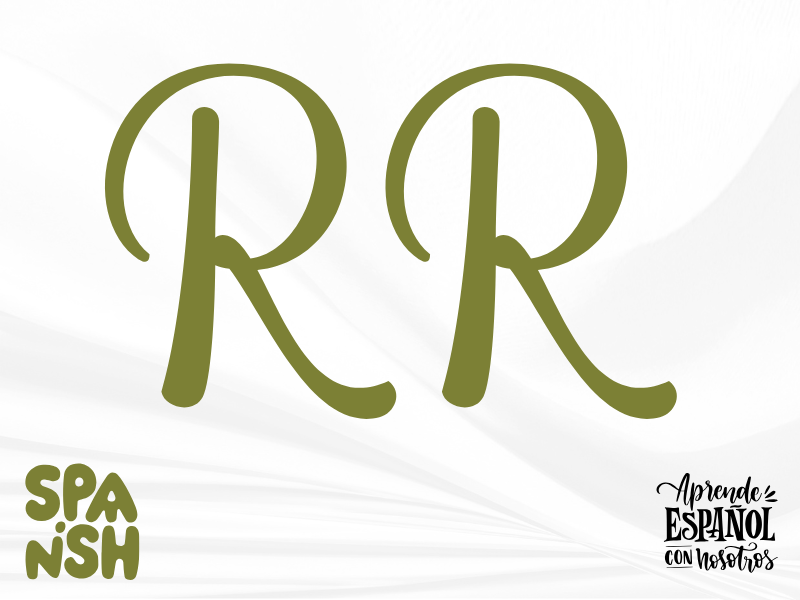
This beautiful letter—often the nightmare of foreigners learning Spanish—has its origins in Latin, the mother language of Spanish. The RR represents a multiple alveolar trill consonant sound.
For many years, the RR was taught as an additional letter of the Spanish alphabet. However, in 1994 the Royal Spanish Academy (RAE) recommended that it should no longer be considered a separate letter, but rather a digraph—two letters that represent a single sound.
The RR is pronounced only between vowels and never appears at the beginning or end of a word.
Latin grammarians called it littera canina (“the canine letter”) because of its resemblance to a dog’s growl.
To pronounce it correctly, the tip of the tongue is placed against the alveolar ridge, allowing the tongue to vibrate briefly as air passes through.
Beyond what the Royal Spanish Academy states, the pronunciation of the RR today can reveal a speaker’s region or cultural background.
In the Andean regions, it is common to hear a strong or sibilant RR, meaning a slight whistling sound is added at the end. This pronunciation developed due to the historical contact between Spanish and Indigenous languages such as Quechua, often giving the impression of a “dragged” or prolonged sound.
Along the coastal regions, the sound tends to be much softer. In this case, the tongue barely vibrates and the air passes along its sides, making the RR sound somewhat similar to the English R.
In some areas, the uvular variant—similar to the French R—can be heard, where the word perro may sound like “pego”.
The velarized R is common in regions such as Puerto Rico, where perro may be pronounced as “peho”, and in some cases the RR may even sound like an L.
Ultimately, no pronunciation is better or worse than another. Each variation reflects the identity and history of its people, making Latin America a rich and multicultural region.
To practice the RR, here is a classic Spanish tongue twister:
“Erre con erre cigarro,
erre con erre barril.
Rápido ruedan los carros,
rápido ruedan los carros
cargados de azúcar del ferrocarril.”
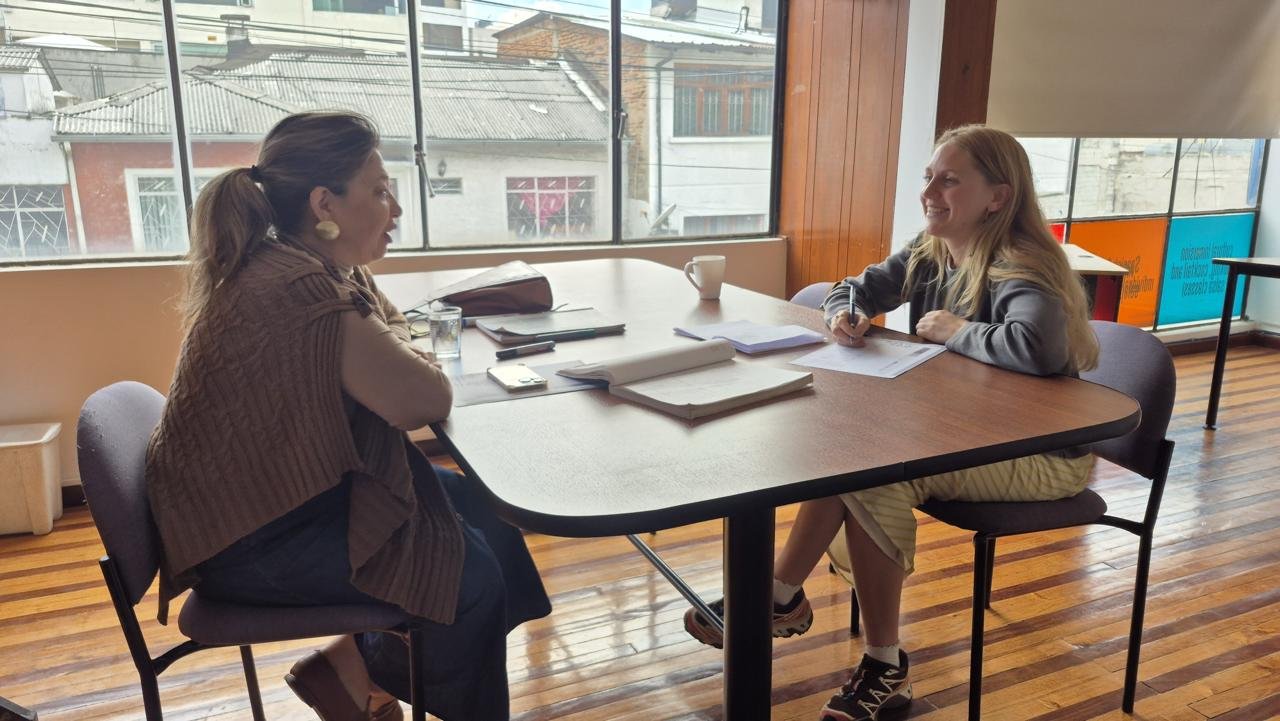
And honestly, the best way to master this sound—or any Spanish pronunciation—is by studying Spanish online or in person with native teachers.
At Fundación Bolívar Education, we offer competitive prices and the flexibility to take classes that fit your schedule.
✨ Study with us and learn much more than just a language. ✨